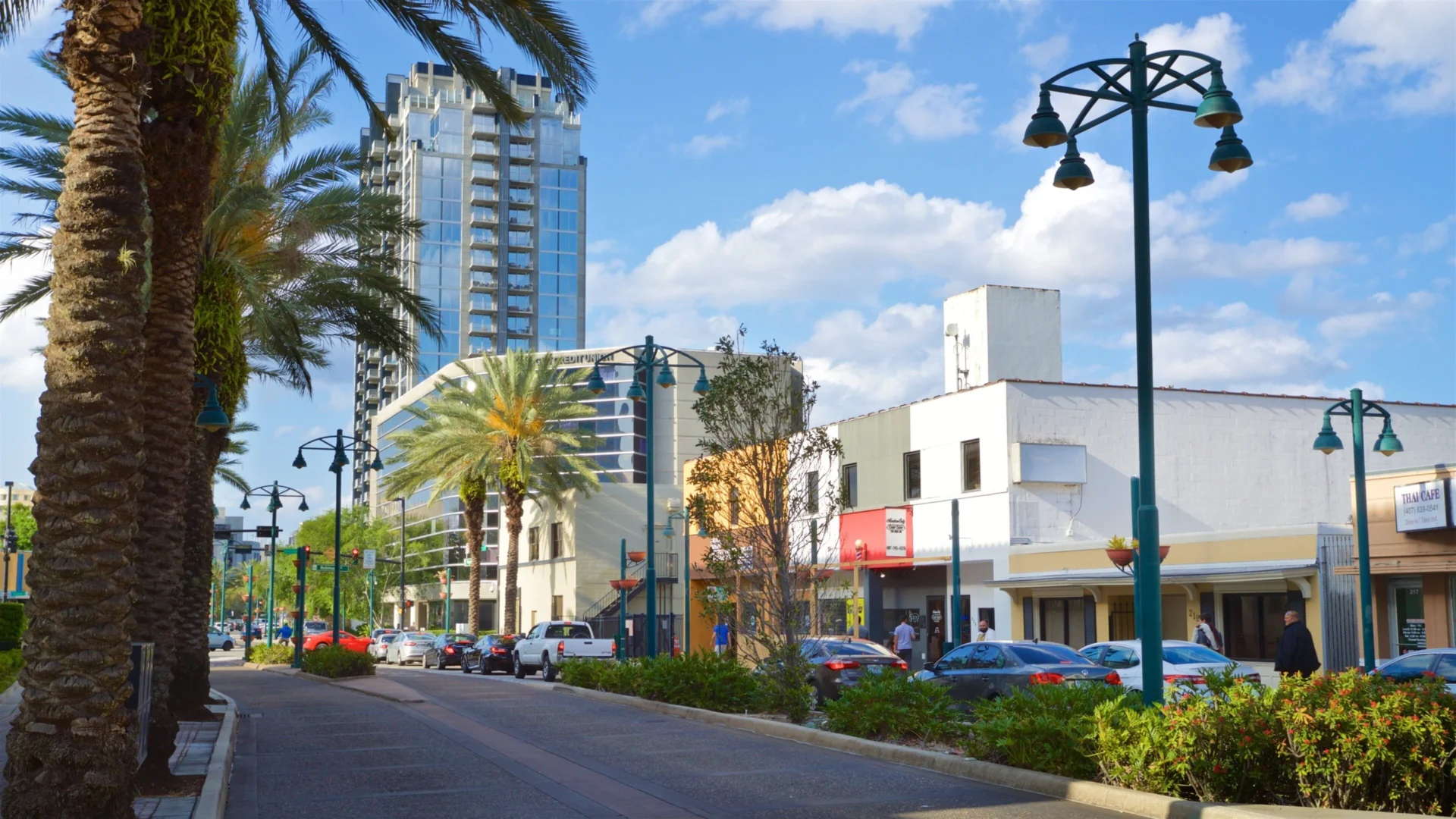
The concept of selling your car, moving into the urban core, and running your weekly routine entirely on foot may seem unlikely in Florida. In Orlando, a metropolitan area historically engineered around theme parks and massive highway interchanges, this question reveals a surprising reality. Downtown stands out as the ultimate exception, providing a landscape where the mathematics of a car-free lifestyle genuinely function for a distinct set of residents.
The scenario is firmly backed by data: Downtown Orlando proudly carries a Walk Score of 96 out of 100. The complimentary LYMMO bus system services the urban core at zero cost to riders, and the SunRail commuter train allows professionals to completely bypass the notorious I-4 highway traffic. However, a comprehensive strategic analysis requires evaluating specific variables, such as intense summer heat, grocery shopping logistics, and a shifting condominium market that just presented buyers with their strongest negotiating position in years.
This technical guide breaks down the true costs of urban mobility in the downtown core, identifies where the car-free model faces challenges, and pinpoints exactly which blocks deliver on the promise of an elevated quality of life.
The True Cost of Walkability in the Core
In March 2026, a typical downtown Orlando condo traded at a median price of $275,000. Operating at approximately $263 per square foot, the downtown sector commands a premium over the broader metropolitan average. This premium is paid directly for locational convenience: the closer the property sits to Lake Eola, the less driving is required, effectively translating daily steps into direct savings on gasoline, parking fees, and a secondary auto loan.
The financial equation becomes crystal clear when evaluating maintenance costs. The majority of downtown high-rises enforce a Homeowners Association (HOA) fee ranging between $500 and $900 per month, covering building management, 24-hour security, and water expenses. Conversely, national data indicates that the total cost of owning a vehicle, factoring in financing, Florida's elevated insurance premiums, fuel, and routine maintenance, easily exceeds $9,000 annually. By reducing a household fleet from two cars to a single vehicle, the resulting savings (between $9,000 and $12,000 per year) frequently neutralizes the high-rise condo fee for investors and primary residents alike.
The strategic stance adopted by Florida Connexion when advising investors is definitive: avoid purchasing the cheapest available unit positioned on the extreme edges of the urban core. Prioritize properties located within a 10-minute walk to Lake Eola and an active LYMMO transit stop. The price-per-square-foot premium on a centralized unit is offset by the elimination of the secondary vehicle. Outlying units that appear as bargains on paper inevitably erase those savings the moment they force a resident to maintain an active car loan.
The Mistake That Disrupts Financial Planning
The transition fails when a resident completely eliminates personal transportation without validating their basic routine, only to discover that the nearest full-size grocery store requires a 22-minute walk in the intense August heat. The most common error committed by new downtown residents is celebrating the high Walk Score and dining options while forgetting that access to leisure and the ability to run daily errands represent two entirely different metrics.
This oversight impacts the household budget directly. Individuals who abandon their cars without planning shopping logistics spend, on average, $250 to $400 monthly on rideshare applications to accommodate grocery runs, navigate rainy days, and manage airport transfers. This expense is equivalent to a modest monthly car payment.
The corporate recommendation is to phase the transition. Keep one vehicle for the first six months, audit your actual driving trips, and then make a definitive decision. The vast majority of downtown households discover they only drive two or three times a week, making them the ideal profile for maintaining a single shared vehicle per residence.
Why Urban Mobility in Orlando Surprises Newcomers
For out-of-state buyers, Orlando typically conjures images of sprawling suburban developments. The downtown core subverts this pattern entirely. The urban center developed around Lake Eola utilizing a traditional grid layout characterized by short blocks, continuous sidewalks, and closely clustered destinations, starkly contrasting the model based on highway interchanges and massive parking lots.
Public transit efficiency acts as a key catalyst. LYMMO, the downtown circular bus system, operates completely free of charge, interconnecting the Central Business District, the Lake Eola perimeter, and the judicial and university zones. Simultaneously, the SunRail commuter train provides extended reach, linking the core to Winter Park, Maitland, and DeLand, featuring accessible fares ranging from $2 to $9.50. SunRail's primary advantage is its complete avoidance of I-4 highway congestion during peak corporate commuting hours.
Comparing the Premier Downtown Neighborhoods
Downtown Orlando is not a single monolith, but rather an ecosystem of micro-districts. The ideal choice depends entirely on the investor's profile:
- South Eola ($315K): Defined by modern high-rises steps away from Lake Eola. Ideal for condo buyers seeking automotive independence.
- Central Business District ($260K): The corporate and nightlife hub. The best selection for executives utilizing the SunRail system daily.
- Thornton Park ($425K): Cobblestone brick streets and independent gastronomy. Targeted at buyers who prioritize walking to dinner.
- Lake Eola Heights ($480K): Historic residences featuring a dense tree canopy. Focused on the buyer who requires a private yard space.
- Mills 50 ($340K): The culinary capital of the metropolis, hosting the highest concentration of Michelin Guide listings in the region, perfect for food-focused residents.
How Urban Density Transformed Real Estate Dynamics
The inauguration of the integrated University of Central Florida (UCF) and Valencia College campus drew thousands of students and professionals into the urban core, fostering the expansion of coffee shops and extended-hour services. This continuous density sustains the growth of ground-floor retail in new high-rises, shortening walking distances and validating the utility of the LYMMO transit system.
However, this growth did not immunize Downtown from market corrections. Heading into spring 2026, condo prices retreated 15.1% year-over-year, while the median days on market extended from 67 to 104 days. Strict post-2021 state reforms, which now mandate rigorous structural audits and robust capital reserves, impacted demand, particularly within older aging buildings.
For the prepared investor, this market accommodation translates directly into opportunity. Expanding inventory and extended sales periods provide unprecedented negotiating power. The exact regulatory rules that deterred real estate speculation now protect long-term buyers, ensuring that buildings with well-capitalized reserves avoid surprising special assessments down the road.
Analyzing Taxes and Insurance in Downtown
The viability of investing in the core relies heavily on tax and insurance mathematics. Within the City of Orlando, a condo owner faces a combined property tax millage rate hovering near 1% of the assessed taxable value. The $50,000 Homestead Exemption applies exclusively to primary residences, offering no tax relief for vacation properties or rental investments.
Condominium insurance premiums demand meticulous attention. While the owner protects the interior via an HO-6 policy, the association covers the building's exterior structure. Structural policies have faced sharp premium hikes since 2021, directly escalating monthly HOA dues. This explains why two buildings located on the exact same block can present a $200 variance in association fees, entirely independent of the luxury amenities provided.
Frequently Asked Questions (FAQ)
Is downtown Orlando walkable?
Yes. Downtown Orlando boasts a Walk Score of 96 out of 100, making it one of the most walkable areas in Central Florida. Residents in neighborhoods like South Eola and the Central Business District can access dining, fitness centers, and Lake Eola within a 10 to 15-minute walk.
How much does living in downtown Orlando cost without a car?
Eliminating a single vehicle from a household budget saves between $9,000 and $12,000 annually across car payments, insurance, fuel, and maintenance. A car-free lifestyle relies on the free LYMMO bus system, the SunRail commuter train, and rideshare services.
Do you absolutely need a car to live in downtown Orlando?
It is not strictly necessary, but most residents choose to maintain one household vehicle. While public transit covers daily commutes effectively, retaining one car facilitates bulk grocery shopping and navigation during heavy summer rainstorms.
How did recent condo reforms affect downtown Orlando property prices?
New Florida condominium laws requiring stronger financial reserves and strict structural inspections cooled demand for older buildings. This led to a 15% drop in median prices, creating a strong buyer's market with significant negotiating room for well-advised investors.
Trading highway commutes for a lifestyle focused on active mobility requires careful wealth planning. The advisory team at Florida Connexion guides buyers and investors in downtown Orlando, ensuring that cross-referencing data on insurance premiums, association fees, and real estate appreciation results in a highly secure and profitable acquisition.